The Danger of a Full Table

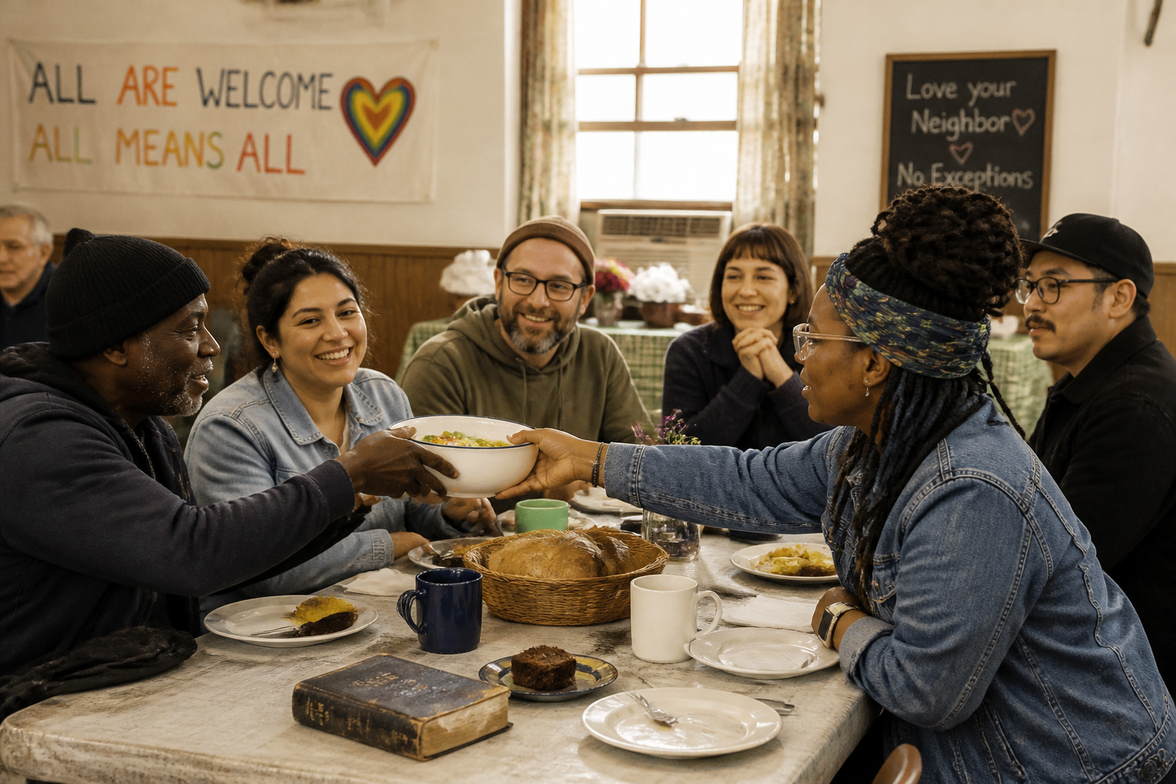
"Take care that you do not forget the LORD, who brought you out of the land of Egypt, out of the house of slavery." (Deut. 6:12)
"This is my comfort in my distress, that your promise gives me life." (Ps. 119:50)
"You do not understand that it is better for you to have one man die for the people than to have the whole nation destroyed." (John 11:50)
Reflection:
Deuteronomy issues its warning at the strangest moment: not in the hunger, but in the fullness. "When you have eaten your fill and have built fine houses and live in them." That is when forgetting sets in. Prosperity has a way of sanding off the story. The Israelites will sit in homes they did not build, drink from cisterns they did not dig, and the danger is that the abundance will feel earned rather than gifted, that Egypt will become a story told at a comfortable distance. Moses insists on the opposite: "We were Pharaoh's slaves in Egypt, and the LORD brought us out." Memory is not nostalgia here; it is the discipline that keeps gratitude tethered to justice.
The psalmist knows what memory costs. He sings God's statutes "in the night," is "indignant because of the wicked," and finds in the promise not an escape from distress but life within it. Comfort that only works when everything is going well is not comfort at all. The word that sustains him at midnight is the same word that remembers him when the powerful would rather he disappear.
And then John shows us what the world does with inconvenient lives. Caiaphas does not deny that Jesus raised Lazarus; he weighs him. One death against national stability - the ancient arithmetic of empire, still running in every committee room and budget line that decides whose suffering is an acceptable cost. The council has no interest in whether the miracle was true. Only in whether it threatens the arrangement of things. Jesus withdraws to Ephraim, and the text lets us sit with how quiet his safety has to become.
But we know how this arithmetic is undone. The one handed over for the people does not validate the logic of the exchange; he exposes it. The resurrection of Lazarus was a preview: the God who brought slaves out of Egypt is not finished with graves. So today, be honest about the full table and stubborn about the story that got you to it. Remember Egypt. Watch for the Caiaphas math in your own week. And trust that the God who promises life in distress keeps that promise on the far side of every plot.
Prayer:
God of the Exodus, when our houses are full, and our bellies are full, keep our memories full too. Remind us whose hands built what we enjoy, and free us from the amnesia that lets us call blessing what we took.
In the night hours, when the arithmetic of empire says some lives are spendable, give us the psalmist's stubborn song. Comfort us in our distress, and make that comfort brave enough to stand beside the ones the world counts as cost.
Send us out remembering that we were slaves, that we have been brought out, and that no grave has the last word.
Blessing: Go with a full table and a full memory, knowing the One who brought you out is not done bringing people out. May the promise that gives you life make you generous and unafraid today.

-
Trinity Parish Presbyterian Church