Sing

Reading the Word
From Exodus: When the horses of Pharaoh with his chariots and his chariot drivers went into the sea, the LORD brought back the waters of the sea upon them; but the Israelites walked on dry ground in the middle of the sea. Then the prophet Miriam, Aaron's sister, took a tambourine in her hand; and all the women went out after her with tambourines and with dancing. And Miriam sang to them: "Sing to the LORD, for he has triumphed gloriously; horse and rider he has thrown into the sea."
From Psalm 114: "When Israel went out of Egypt, the house of Jacob from a people of strange language, Judah became God's sanctuary, Israel his dominion. The sea looked and fled; Jordan turned back. The mountains skipped like rams, the hills like lambs... Tremble, O earth, at the presence of the LORD."
From Matthew: Jesus said, "When you are praying, do not heap up empty phrases as the Gentiles do; for they think that they will be heard because of their many words. Do not be like them, for your Father knows what you need before you ask him. Pray then in this way: Our Father in heaven, hallowed be your name. Your kingdom come. Your will be done, on earth as it is in heaven. Give us this day our daily bread. And forgive us our debts, as we also have forgiven our debtors. And do not bring us to the time of trial, but rescue us from the evil one."
Reflection
Miriam does not wait for permission.
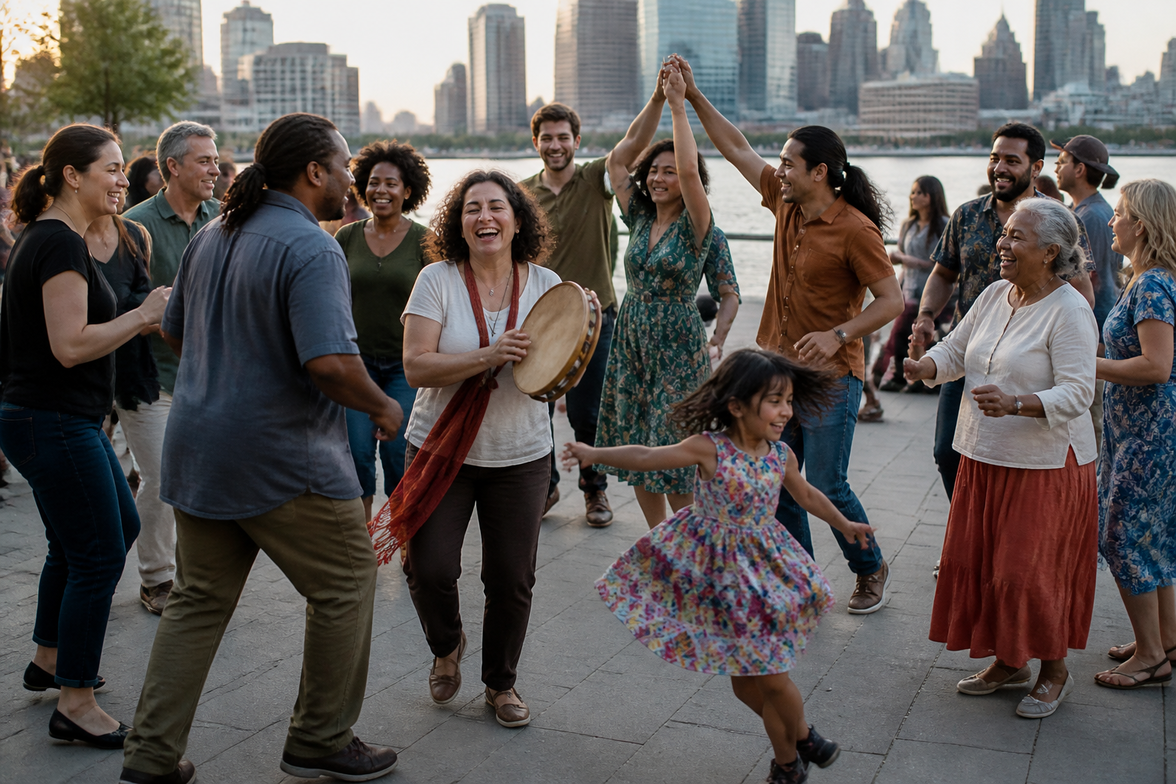
While the men are singing their longer song, Miriam takes a tambourine in her hand, and the women follow her out with dancing. This is not a sideshow. This is liturgy. The first recorded act of public worship after the greatest miracle in Israel's memory is led by a woman, with percussion, with bodies in motion, with the kind of joy that cannot be contained in silence or stillness.
The tambourines were likely carried out of Egypt. The Israelites had packed for the journey, and somewhere in the rush, someone, probably many someones, had grabbed the instruments. They had not known they were packing for praise. They had only known they could not leave the music behind. And now, on the far shore of deliverance, the tambourines come out. The bodies move, and the women sing.
Psalm 114 captures the earth's own astonishment. The sea looked and fled. The Jordan turned back. The mountains skipped like rams. This is not calm, dignified liturgy. This is creation itself dancing, trembling, celebrating the fact that the oppressed have walked through on dry ground. "Judah became God's sanctuary, Israel his dominion." Not a temple built by human hands, but a people set free. That is the sanctuary. Not a territory seized by war, but a community liberated by grace; that is the dominion.
Then Jesus teaches his disciples to pray. The context matters. He has just said: do not heap up empty phrases. Do not perform piety. God knows what you need. This is the corrective to every religious impulse that makes prayer about performance, about eloquence, about the right words in the right order. The Gentiles, the ones outside the covenant, think they will be heard for their many words. Jesus says: you are already known. You don't need to earn God's attention.
The prayer he gives is shockingly simple. God's kingdom come to earth. Daily bread. Forgiveness. Deliverance. It is the prayer of people on the move, people who have walked through the sea, people who know that their survival depends on daily provision and their community depends on mutual forgiveness. "On earth as it is in heaven" is not a pious wish. It is the cry of a people who have seen the powers of death thrown into the sea and who believe that God's way can become real in the world that Pharaoh built.
This is the heart of worship. We do not gather to impress God with our eloquence. We gather because we have walked through something, and on the other side, there is Miriam with her tambourine; there is the earth trembling at the presence of the liberator; there is the simple prayer of a community that knows it cannot survive without daily bread and daily forgiveness.
The kingdom comes not when we get the words right, but when we live as if the sea really has parted, as if the horse and rider really have been thrown down, as if the woman with the tambourine really is a prophet leading us in praise.
Prayer
O God, teach us to pray without performance. You know what we need. You know the words we cannot find. Hear our silences. Hear our groaning. Hear the tambourines.
Your kingdom come...not as a theory, but as bread, as forgiveness, as deliverance from evil.
Make us a sanctuary, not of stone, but of dancing people, liberated and liberating.
And when we have forgotten the dance, lead us back to the shore where the water still trembles at your presence.
Our Father, hallowed be your name.
In the name of Jesus, who taught us to pray, we pray. Amen.
For Today
Where do you need to put down the script and simply be present with God? What would it mean for your body to join the dance of liberation? And who in your life needs the simple gift of daily bread, daily forgiveness, daily deliverance?

-
Trinity Parish Presbyterian Church