Being Formed

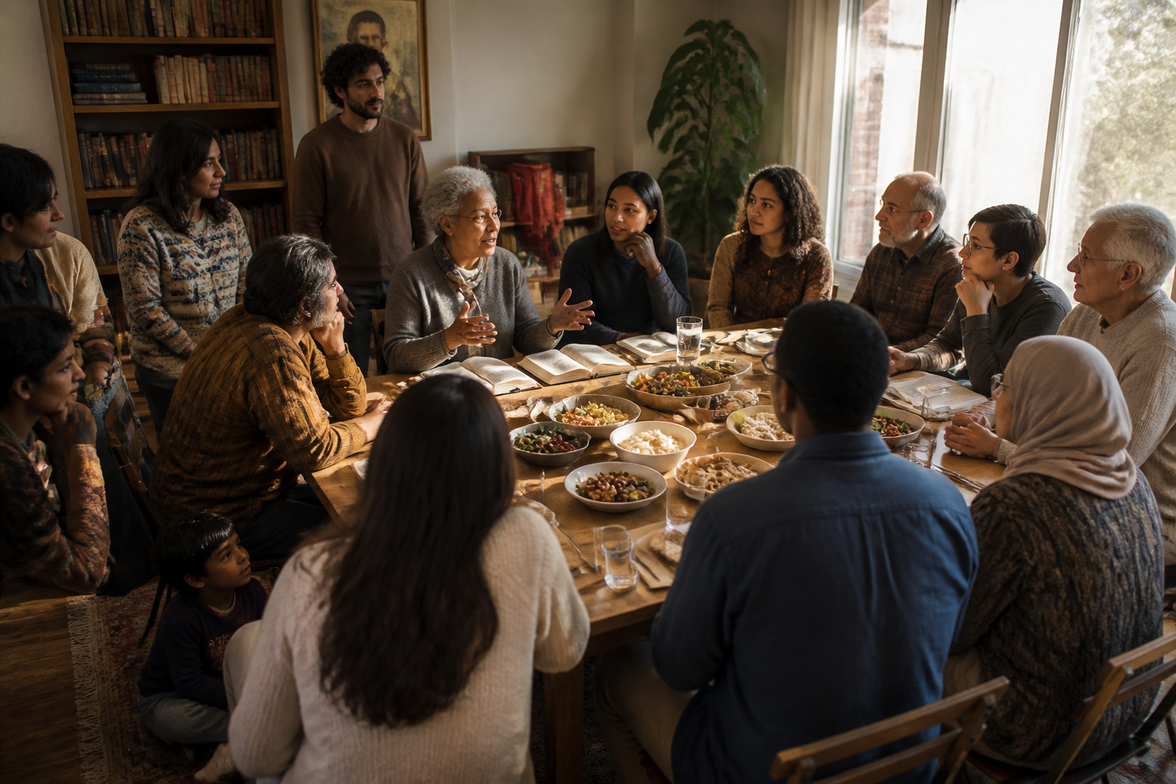
Reading the Word
From Nehemiah: "You saw the affliction of our ancestors in Egypt, and heard their cry at the Red Sea... You performed signs and wonders against Pharaoh, against all his servants and all the people of his land... You divided the sea before them, so that they passed through the sea on dry land... And you led them by day with a pillar of cloud, and by night with a pillar of fire... You came down also upon Mount Sinai, and spoke with them from heaven, and gave them right ordinances and true laws, good statutes and commandments. And you made known your holy sabbath to them and gave them commandments and statutes and a law through your servant Moses... You gave them bread from heaven for their hunger, and brought water for them out of the rock for their thirst."
From Psalm 77: "I cry aloud to God... In the day of my trouble I seek the Lord... Has his steadfast love ceased forever?... I will call to mind the deeds of the LORD... You are the God who works wonders... With your strong arm you redeemed your people."
From Romans: "Let us therefore no longer pass judgment on one another, but resolve instead never to put a stumbling block or hindrance in the way of another... I know and am persuaded in the Lord Jesus that nothing is unclean in itself; but it is unclean for anyone who thinks it unclean... If your brother or sister is being injured by what you eat, you are no longer walking in love... Welcome one another, therefore, just as Christ has welcomed you, for the glory of God."
Reflection
Nehemiah's people are standing in the rubble of a rebuilt city, and what they do is remember.
The public prayer is a recitation of Israel's whole story: the affliction in Egypt, the cry at the Red Sea, the signs against Pharaoh, the pillar of cloud and fire, Sinai, the law, the bread, the water. This is how a people survives exile. Not by amnesia, not by moving on, but by telling the story over and over until it becomes their identity. The law is not a burden in this telling. It is a gift. The Sabbath is not a restriction. It is the sign that God formed them as a people with dignity and rest.
Psalm 77 is the personal version of the same act. One person, drowning in doubt, chooses to call to mind the deeds of the LORD. The waters saw you and writhed, the psalmist sings. The same waters that blocked the way became witnesses to God's power. Memory is the bridge between despair and hope.
But memory is not enough. The people must learn to live together. And that is where Romans 14 becomes essential. The Roman church was divided over food - whether Christians could eat meat sacrificed to idols, whether they must keep kosher, whether certain days were holier than others. Paul says: stop judging each other. What is clean for one may be unclean for another, not because of the food but because of conscience. The kingdom of God is not about what you eat. It is about righteousness and peace and joy in the Holy Spirit.
And then the radical turn: "Welcome one another, therefore, just as Christ has welcomed you, for the glory of God." This is the standard. Not tolerance. Not grudging acceptance. Welcome. The same welcome that Christ extended to us while we were still enemies, still broken, still wrong about almost everything. We welcome each other not because we agree but because we have been welcomed.
This should be the Church's daily work. We are a mixed multitude at the river; former slaves, Egyptians who joined the exodus, people with different consciences, different histories, different convictions about what is clean and unclean. The law was given to form us into a people. The Sabbath was given to teach us rest. The manna was given to teach us daily dependence. But none of it matters if we tear each other apart over our differences.
Welcome one another. That is how the glory of God becomes visible in a fractured community. Not by uniformity but by love across difference. Not by winning the argument but by laying down our right to be right for the sake of the weak. Not by forgetting our story but by telling it in a way that makes room for everyone at the table.
Prayer
O God, you formed us in the wilderness. You gave us bread from heaven, water from the rock, law to guide us, Sabbath to restore us.
We confess that we have used your gifts as weapons against one another. We have judged what you welcomed. We have excluded what you formed.
Teach us to remember without weaponizing. Teach us to welcome as we have been welcomed. Make our community a place where the weak are not stumbled, where the different are not shamed, where the glory of God is visible in our love.
We cry aloud in our trouble, and we call to mind your wonders. Redeem us again. Form us again. Welcome us again. Amen.
For Today
Where are you passing judgment on someone whose conscience differs from yours? What would it mean to welcome them as Christ welcomed you? And what story do you need to remember today when despair feels closer than hope?
Blessing
May you remember the God who made the waters writhe. May you welcome the one whose conscience is not yours. And may the glory of God be visible in your community, not because you agree, but because you love.
-
Trinity Parish Presbyterian Church