The Long Way Around

Daily Devotional | Tuesday, April 14, 2026
Year A | Easter Season — Tuesday in the Week of the Third Sunday of Easter
Today's Readings
From the Vanderbilt Revised Common Lectionary
- Psalm 114: A celebration of God’s deliverance of Israel from Egypt and the response of creation.
- Jonah 1:1-17: The account of Jonah’s flight from God’s call, the storm at sea, and the great fish.
- 1 Corinthians 15:19-28: Paul’s teaching on Christ as the firstfruits of the resurrection and the destruction of death.
Featured Artwork
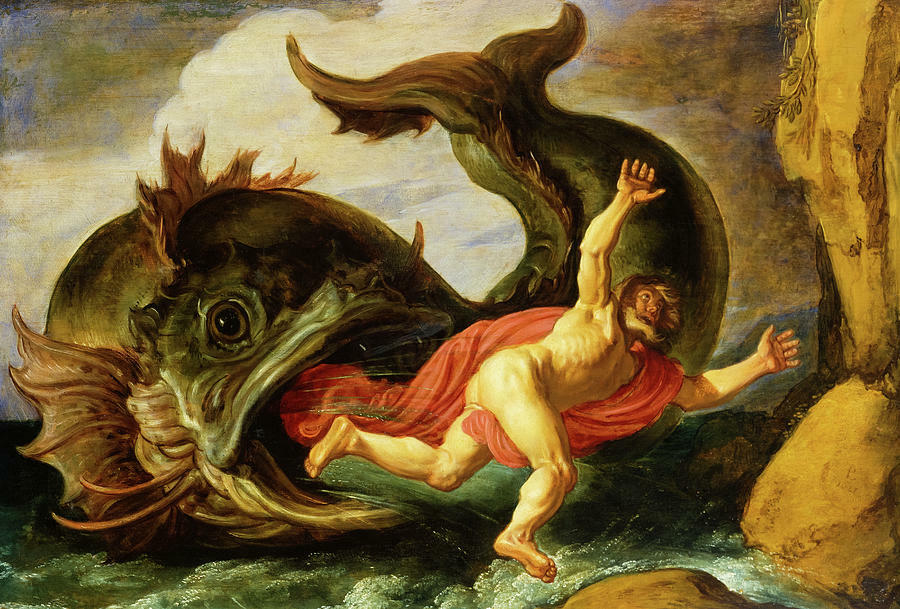
Jonah and the Whale
Artist: Pieter Lastman (1621)
Location: Museum Kunstpalast, Düsseldorf, Germany
Source: Vanderbilt Divinity Library Art in the Christian Tradition.
In this Baroque painting by Pieter Lastman—the teacher of Rembrandt—Jonah is captured in the breathless moment of transition between the depths of the sea and dry land. His robes are soaked, his body appears spent, yet the composition emphasizes survival. The worst trial Jonah faced ultimately became the very ground beneath his feet.
Reflection: The Long Way Around
Jonah’s narrative is often defined by a single pivot: God said, "Go east to Nineveh," and Jonah went west to Tarshish. He sought the furthest point a boat could carry him, eventually retreating into the hold of a ship to sleep. This quiet withdrawal is a familiar human pattern; avoiding a difficult calling by descending into distraction or routine.
Creation’s Response
Psalm 114 provides a cosmic perspective on this struggle. It describes how the natural world bends to accommodate God’s purposes: "The sea looked and fled; the Jordan turned back. The mountains skipped like rams." The psalmist suggests that if an entire ocean moves to make way for God’s liberating intent, a single ship bound for Tarshish cannot provide a true hiding place. Whether through a storm or a great fish, God’s purpose eventually finds its way to the shore.
The Witness of Others
In the Jonah narrative, the sailors often possess more spiritual clarity than the prophet. Though they were strangers to Jonah’s faith, they prayed, worked to save the vessel, and resisted throwing Jonah overboard even when he requested it. This serves as a reminder that those around us often see the "storms" we have created more clearly than we can ourselves. Sometimes the most faithful response is to come up from "below deck," acknowledge the truth of our situation, and allow others to support us.
The Final Victory
Paul’s letter to the Corinthians reminds us that "the last enemy to be destroyed is death." If death, the most permanent reality of human existence, is temporary in the light of the Resurrection, then the challenges we run from are rarely as insurmountable as they feel. Jonah took a circuitous and uncomfortable path, but he eventually reached Nineveh. Our own "Ninevehs," those daunting calls or difficult changes, are within reach because nothing can truly hold its ground against God's redemptive work.
A Prayer for Today
Gracious God,
We confess that we are often remarkably efficient at running in the wrong direction. We know how to stay occupied with small things to avoid hearing Your larger call.
When the storms of life arrive, help us to surface before we are overwhelmed. If we find ourselves in a dark place, wondering if our story has reached its end, remind us of Your power over the grave. As you have already swallowed death itself, remind us that the darkness is not the final word.
Be with those who are currently in the midst of the "storm," feeling lost or swallowed by circumstance. Hold them in the dark and lead them toward the shore.
In the name of the Risen Christ, the firstfruits of a new creation.
Amen.
Scripture quotations are from the New Revised Standard Version (NRSV). Artwork curated via the Vanderbilt Divinity Library Art in the Christian Tradition database.

-
Trinity Parish Presbyterian Church