Not Dead Yet

Liturgical Timing: Wednesday in the Second Week of Easter
Lectionary Cycle: Year A
Today’s Readings
The following readings are sourced from the Vanderbilt Revised Common Lectionary:
- Psalm 114: A poetic recollection of God's power over the natural world, depicting the parting of seas and the liberation of His people.
- Jonah 2:1-10: Jonah’s prayer of desperation and faith from the depths of the "great fish."
- Matthew 12:38-42: Jesus references the "Sign of Jonah" as the sole proof of His authority to the scribes and Pharisees.
Featured Artwork
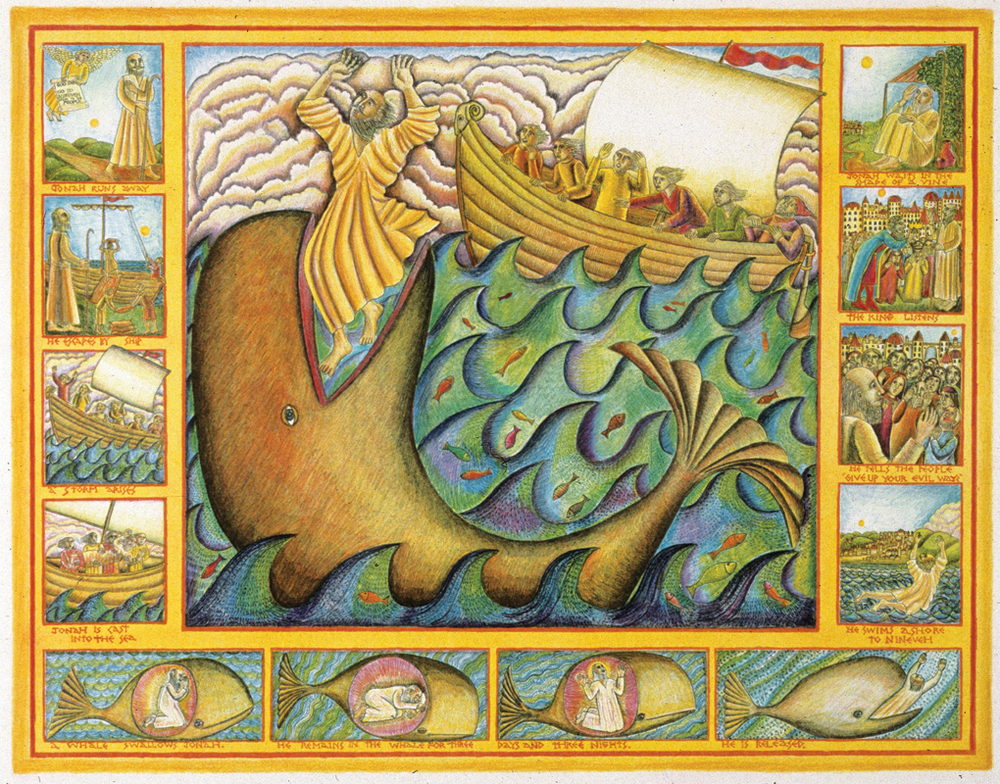
Title: Jonah (1993)
Artist: John August Swanson
Source: Vanderbilt Divinity Library Art in the Christian Tradition
In Swanson's vibrant, deeply textured serigraph, Jonah is shown enveloped in the swirling, chaotic depths of the sea. While the fish is massive and the environment claustrophobic, the use of light and color suggests that God’s presence remains active even in the darkness. The image portrays the "belly of the whale" not as a tomb, but as a place of waiting and transformation.
Reflection: Not Dead Yet
While the initial chapters of Jonah often focus on the human tendency to flee from difficult callings, Jonah 2 finds the prophet at the destination of that flight: rock bottom. Swallowed by darkness and trapped in the depths, Jonah’s experience mirrors the modern "belly of the whale" moments encountered in daily life.
These moments of darkness often manifest in different ways:
- Global Anxiety: The weight of international conflict, rising costs of living, and the feeling of powerlessness against large-scale geopolitical tensions.
- Personal Hurdles: The "bumps in the road"—from literal accidents and health anxieties, to the emotional toll of professional and personal stress.
- Compassion Fatigue: The heaviness of walking alongside others in crisis, particularly those struggling with mental health or the consequences of difficult choices.
When Jonah prays, he does not minimize his distress, stating, "The waters closed in over me; the deep surrounded me." However, the miracle lies in the act of prayer itself. In the darkest place imaginable, Jonah recognizes that being buried is not the same as being finished. He is, quite literally, "not dead yet."
In the Gospel of Matthew, Jesus uses Jonah’s narrative to foreshadow His own resurrection. The "Sign of Jonah" serves as a promise that time spent in the dark, whether three days in a tomb or a season of personal struggle, is not the end of the story. It suggests that Christ descended into the deepest trenches of human suffering to prove that God is present even there.
The "belly of the whale" is often frightening and uncomfortable, yet it can serve as a vessel of grace. Holding us safe in the midst of the storm until we are ready to emerge, transformed and renewed, onto dry land.
Prayer
Merciful God, when the waters close in over us and we feel swallowed by the anxieties of the world or the struggles of those we love, give us the grace to remember You. Remind us that even in the pitch black, Your Spirit is at work. Help us trust the Sign of Jonah. That the tomb is empty, the darkness does not have the final say, and we are held by a Love that will not let us go! Amen.
-
Trinity Parish Presbyterian Church