Many Waters Cannot Quench Love

Lectionary Cycle: Year A, Easter Season
Author: Rev. Anthony "Tony" DeLucia
Today’s Lectionary Readings
Sourced from the Vanderbilt Revised Common Lectionary
- Psalm 16: "In your presence there is fullness of joy; in your right hand are pleasures forevermore."
- Song of Solomon 8:6-7: "Set me as a seal upon your heart... for love is strong as death... many waters cannot quench love, neither can floods drown it."
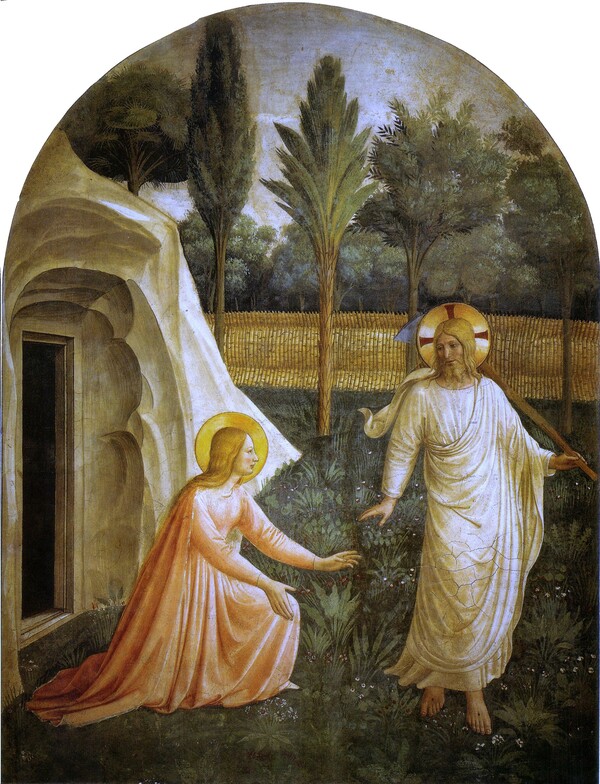
- John 20:11-20: Mary Magdalene encounters the Risen Christ at the tomb.
Reflection
There is a kind of love that cannot be argued out of a person. It does not weigh the odds or respond to cold logic. It shows up in the dark, before the sun is up, at an empty tomb—and it stands there and weeps.
In John 20, we find Mary Magdalene in this exact position. While others had already gone home, concluding that the journey was over, Mary stayed. She lingered where hope had last been seen, unable to walk away from the entrance of a cave that was supposed to hold what she loved. This is a scene recognizable to anyone who has ever "stayed" past the point of reason: the relationship that dissolved without closure, the dream held onto longer than was wise, or the grief that refuses to be released. We have all stood at an empty tomb of one kind or another.
The Song of Solomon understood this centuries before the resurrection: love is strong as death. It is not merely a polite standoff; love possesses the same ferocity as death itself. As the poet writes, "Many waters cannot quench love, neither can floods drown it." You can pour reason over it or bury it under practical concerns, and yet it remains standing in the garden before sunrise.
When the Risen Lord chooses to speak in his first extended encounter after the resurrection, he does not offer a creed or a theological thesis paper. The new creation begins with a single, intimate word:
"Mary."
It is the name that belongs only to her. In that moment, the resurrection ceases to be a theological claim and becomes a reunion. It is the confirmation that the love that would not let go finally receives what it was reaching for.
The story immediately expands. John’s account shows Jesus standing with the disciples behind locked doors that same evening, offering peace to a community scattered by fear. But on this Saturday, the narrative begins with the individual, stubborn heart. The resurrection reminds us that the Risen One comes to us specifically, calling us by name in the gardens where we are still weeping over what we have lost.
Personal Application
- Where in your life are you currently standing outside a "tomb," waiting for a resolution?
- What would it mean for you to hear your name spoken by the Voice that loves you without limit today?
Visual Meditation
Featured Artwork: Noli Me Tangere (c. 1440-1441)
Artist: Fra Angelico
Location: Convent of San Marco, Florence

-
Trinity Parish Presbyterian Church